Easy Vegan Bibimbap Recipe – Wholesome & Delicious
Vegan Bibimbap is a culinary masterpiece that brings vibrant colors, textures, and incredible flavors to your plate. There’s something universally captivating about this Korean rice bowl, and this vegan rendition is no exception. What’s not to love about a hearty base of perfectly cooked rice, crowned with an artful arrangement of fresh, crisp, and often marinated vegetables, tender protein, and a silky, spicy sauce? People adore Vegan Bibimbap because it’s not just a meal; it’s an experience. It’s a fantastic way to pack in a multitude of nutrients, offering a delightful balance of textures that keeps every bite exciting. The magic truly lies in the customization and the harmonious blend of individual components coming together in a symphony of taste. It’s the ultimate comfort food that also feels incredibly wholesome and satisfying.
Ingredients:
- 1 large cucumber
- 200 g fresh spinach
- 100 g bean sprouts
- 1 large carrot
- 200 g firm tofu
- 100 g mushrooms (enoki mushrooms recommended)
- Salt to taste
- Sesame oil for sautéing and finishing
- 2 cloves garlic, minced (for tofu)
- 2 tablespoons gochujang (Korean chili paste)
- 1 tablespoon rice vinegar
- 1 tablespoon agave nectar or maple syrup
- 1 tablespoon soy sauce
- 2 cloves garlic, minced (for sauce)
- 2 teaspoons sesame oil (for sauce)
Preparation of Vegetables
Cucumber
Start by preparing the cucumber. Wash it thoroughly and then slice it into thin, matchstick-like strips. If the cucumber has large seeds, you can scoop them out with a spoon before slicing to avoid excess moisture. Once sliced, place the cucumber strips in a small bowl. Sprinkle a pinch of salt over them and toss gently. Let them sit for about 10-15 minutes. This process, known as “sweating” the cucumber, helps to draw out excess water, preventing the bibimbap from becoming watery and also slightly pickles the cucumber for a pleasant tang. After sweating, gently press down on the cucumber strips with your hands or a paper towel to remove any remaining liquid.
Spinach
Next, move on to the spinach. Wash the spinach very well to ensure no dirt or grit remains. In a medium saucepan, bring about an inch of water to a boil. Add the washed spinach and blanch it for just 30-60 seconds, or until it turns bright green and wilts. Immediately drain the spinach and rinse it under cold running water to stop the cooking process and preserve its vibrant color. Squeeze out as much excess water as possible from the spinach by gently pressing it with your hands. In a separate small bowl, toss the squeezed spinach with a teaspoon of minced garlic, a teaspoon of sesame oil, and a pinch of salt. Mix well to evenly distribute the seasonings.
Bean Sprouts
For the bean sprouts, ensure they are fresh and firm. Rinse them under cold water. In the same saucepan used for the spinach, bring another small amount of water to a boil. Add the rinsed bean sprouts and blanch them for about 1-2 minutes, until they are tender but still have a slight crispness. Drain them thoroughly and rinse with cold water. Toss the blanched bean sprouts with a teaspoon of sesame oil and a pinch of salt. Again, ensure everything is well combined.
Carrot
Peel the carrot and then julienne it into thin matchsticks, similar to how you prepared the cucumber. Heat a teaspoon of sesame oil in a non-stick skillet over medium heat. Add the julienned carrots to the hot skillet and stir-fry for 3-5 minutes, or until they are tender-crisp. Season them with a pinch of salt. Be careful not to overcook them; they should retain a slight bite. Remove the carrots from the skillet and set them aside.
Mushrooms
If you are using enoki mushrooms, trim off the very end of the base. If using other mushrooms, slice them accordingly. Heat another teaspoon of sesame oil in the same skillet over medium-high heat. Add the mushrooms and sauté them until they are tender and have released their moisture, about 3-5 minutes. Season with a pinch of salt. If you are using a larger mushroom variety, ensure they are cooked through and slightly browned for better flavor.
Tofu Preparation
Marinating and Cooking Tofu
Now, let’s prepare the tofu. Gently press the firm tofu to remove excess water. You can do this by wrapping it in paper towels and placing a heavy object on top for about 15-20 minutes, or by using a tofu press. Once pressed, cut the tofu into bite-sized cubes or thin rectangular slices. In a small bowl, whisk together 1 tablespoon of soy sauce, 1 teaspoon of minced garlic, and 1 teaspoon of sesame oil. Add the tofu pieces to this marinade and let them sit for at least 10 minutes, allowing the flavors to penetrate. Heat a tablespoon of sesame oil in a non-stick skillet over medium-high heat. Carefully add the marinated tofu pieces in a single layer, ensuring not to overcrowd the pan. Cook for about 4-5 minutes per side, until golden brown and slightly crispy. Remove from the skillet and set aside.
Gochujang Sauce
Mixing the Sauce
Prepare the gochujang sauce, which is the heart of the bibimbap flavor. In a small bowl, combine 2 tablespoons of gochujang, 1 tablespoon of rice vinegar, 1 tablespoon of agave nectar or maple syrup, and the remaining 1 teaspoon of minced garlic. Stir vigorously until all the ingredients are well incorporated and you have a smooth, vibrant sauce. You can adjust the sweetness by adding a little more agave or maple syrup, or the tang by adding a touch more rice vinegar, according to your preference. The gochujang itself can vary in spiciness, so taste and adjust as needed. This sauce should have a balance of spicy, sweet, and savory notes.
Assembling Your Vegan Bibimbap
Bringin extractg it all Together
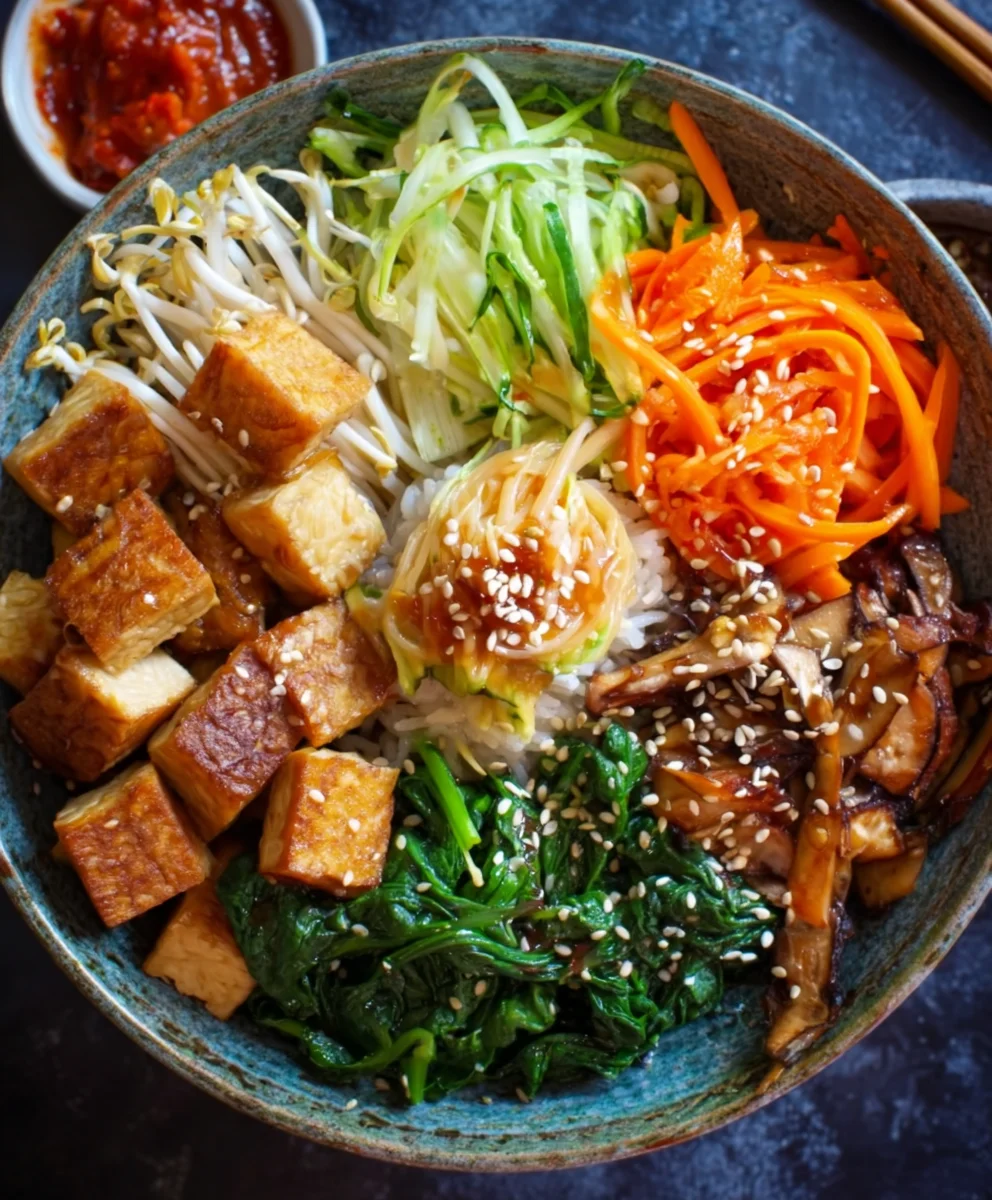
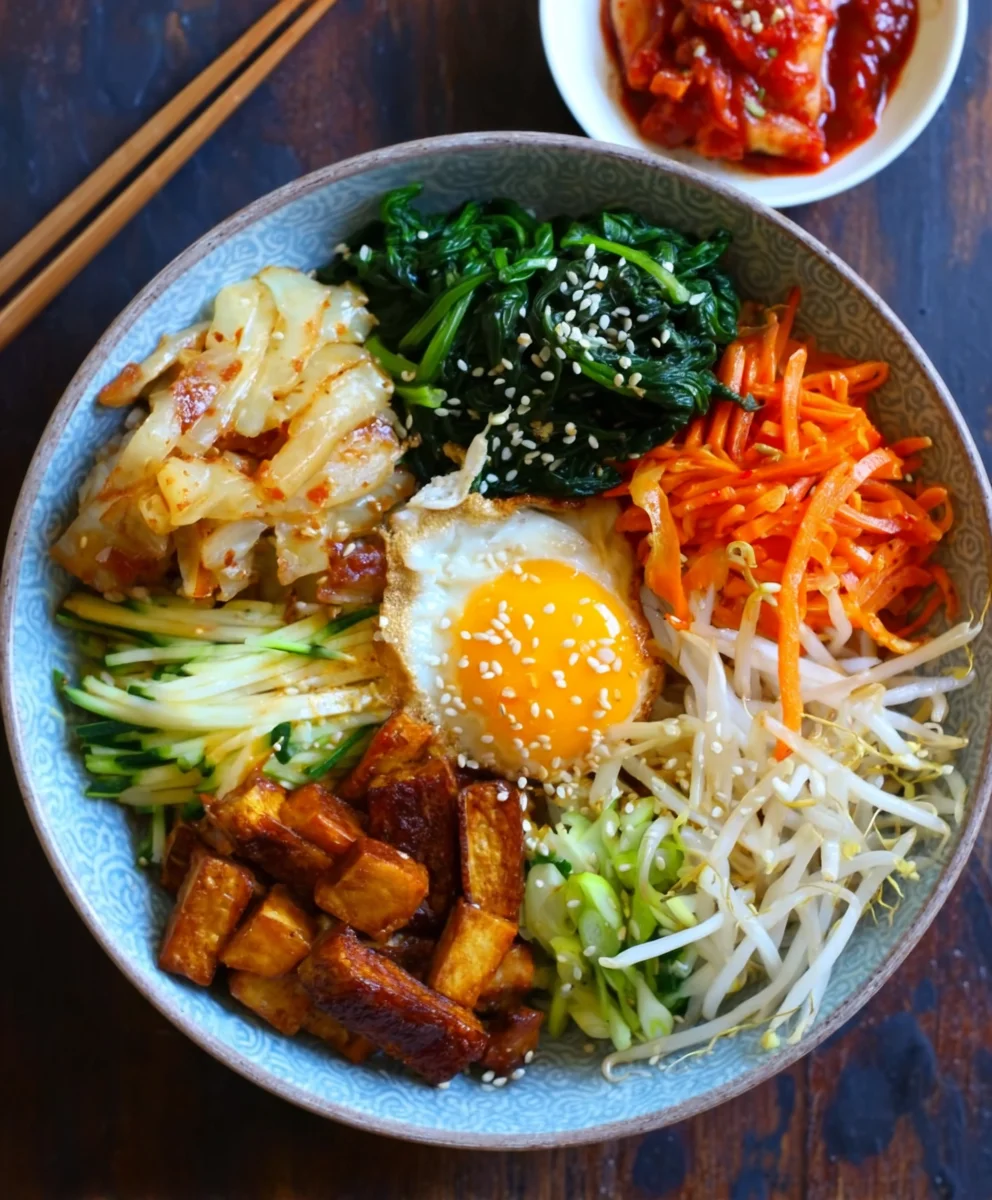
This is where all your hard work pays off. You’ll need cooked rice, ideally short-grain or medium-grain rice, for the base. Divide a generous portion of hot rice into individual serving bowls. Now, artfully arrange the prepared toppings over the rice. Place sections of the salted cucumber, seasoned spinach, blanched bean sprouts, sautéed carrots, and pan-fried tofu around the bowl, creating a visually appealing mosaic. You can also add the sautéed mushrooms to one section. Finally, dollop a generous spoonful of the prepared gochujang sauce right in the center of the toppings. For an extra touch of flavor and visual appeal, you can drizzle a little extra sesame oil over the entire dish and sprinkle with toasted sesame seeds if you have them. To eat, use your spoon and chopsticks to mix all the ingredients together with the rice and sauce before taking a bite, ensuring you get a taste of everything in each mouthful. The beauty of bibimbap is its customizable nature, so feel free to add or swap toppings based on what you have available.
Conclusion:
There you have it – a delicious and satisfying recipe for Vegan Bibimbap! We’ve walked through creating a flavorful rice base, prepping vibrant vegetable toppings, and assembling a beautiful, balanced meal. This dish is incredibly versatile and a fantastic way to incorporate a variety of nutrients into your diet. Don’t be afraid to get creative with your vegetable choices; whatever you have on hand will likely work wonderfully!
For serving, consider topping your Vegan Bibimbap with a drizzle of your favorite gochujang sauce (adjust the spice level to your preference!), a sprinkle of sesame seeds, or a side of kimchi for an extra fermented kick. It’s perfect as a hearty lunch or a light yet filling dinner.
This recipe is a wonderful starting point. Feel free to experiment with different vegetables like blanched knon-alcoholic ale, sautéed mushrooms, or even marinated tofu or tempeh for added protein. The possibilities are truly endless, making Vegan Bibimbap a dish you can enjoy time and time again without ever getting bored.
Frequently Asked Questions:
What kind of rice is best for Vegan Bibimbap?
Medium-grain or short-grain white rice is generally preferred for its slightly sticky texture, which holds the toppings well. Brown rice is also a healthy and delicious alternative, though it may have a slightly chewier texture.
Can I prepare some components of Vegan Bibimbap ahead of time?
Absolutely! Most of the vegetable toppings can be prepped a day in advance and stored in airtight containers in the refrigerator. This makes assembly on the day of eating much quicker and easier, perfect for busy weeknights.
Easy Vegan Bibimbap Recipe – Wholesome & Delicious
A vibrant and healthy vegan bibimbap recipe packed with colorful vegetables, pan-fried tofu, and a flavorful gochujang sauce. Perfect for a satisfying and customizable meal.
Ingredients
-
1 large cucumber
-
200 g fresh spinach
-
100 g bean sprouts
-
1 large carrot
-
200 g firm tofu
-
100 g mushrooms (enoki mushrooms recommended)
-
Salt to taste
-
Sesame oil for sautéing and finishing
-
2 cloves garlic, minced (for tofu)
-
2 tablespoons gochujang (Korean chili paste)
-
1 tablespoon rice vinegar
-
1 tablespoon agave nectar or maple syrup
-
1 tablespoon soy sauce
-
2 cloves garlic, minced (for sauce)
-
2 teaspoons sesame oil (for sauce)
Instructions
-
Step 1
Prepare the vegetables: Slice cucumber into thin matchsticks, salt, and let sit for 10-15 minutes to sweat. Blanch spinach for 30-60 seconds, shock in cold water, squeeze dry, and toss with garlic, sesame oil, and salt. Blanch bean sprouts for 1-2 minutes, drain, and toss with sesame oil and salt. Julienne carrot and stir-fry in sesame oil until tender-crisp. Sauté mushrooms in sesame oil until tender. -
Step 2
Marinate and cook tofu: Press firm tofu to remove excess water, then cut into bite-sized pieces. Whisk together soy sauce, minced garlic, and sesame oil. Marinate tofu for at least 10 minutes. Pan-fry marinated tofu in sesame oil until golden brown and slightly crispy. -
Step 3
Make the gochujang sauce: Combine gochujang, rice vinegar, agave nectar (or maple syrup), minced garlic, and sesame oil. Stir until smooth. Adjust sweetness and spiciness to taste. -
Step 4
Assemble the bibimbap: Divide cooked rice into serving bowls. Artfully arrange the prepared toppings (cucumber, spinach, bean sprouts, carrots, tofu, mushrooms) over the rice. -
Step 5
Add the sauce: Dollop a generous spoonful of the gochujang sauce in the center of the toppings. Drizzle with extra sesame oil and sprinkle with toasted sesame seeds if desired. -
Step 6
Serve and enjoy: Mix all ingredients together with the rice and sauce before eating.
Important Information
Nutrition Facts (Per Serving)
It is important to consider this information as approximate and not to use it as definitive health advice.
Allergy Information
Please check ingredients for potential allergens and consult a health professional if in doubt.