Easy Chimichurri Sauce Recipe- Flavorful & Fresh
Chimichurri sauce recipe perfection awaits! Have you ever tasted a sauce so vibrant, so bursting with fresh herbs and zesty notes, that it instantly elevates anything it touches? That’s the magic of chimichurri. It’s no wonder this Argentinian staple has captured hearts (and taste buds) worldwide. Forget bland marinades and heavy sauces; chimichurri is the antithesis of dull. It’s a bright, herbaceous, and slightly tangy condiment that dances on your palate, adding a delightful zing to grilled meats, roasted vegetables, and even simple sandwiches. What truly makes this chimichurri sauce recipe special is its incredible versatility and the pure, unadulterated freshness of its ingredients. It’s the secret weapon in my kitchen for transforming ordinary meals into extraordinary experiences, and I’m thrilled to share how you can master it too.
Chimichurri Sauce Recipe
There are some sauces that elevate a dish from good to absolutely unforgettable. Chimichurri is one of those magical concoctions. Hailing from Argentina and Uruguay, this vibrant green sauce is a revelation, bursting with fresh herbs, zesty vinegar, and a hint of spice. It’s traditionally served with grilled meats, particularly steak, but its versatility knows no bounds. Imagin extracte drizzling it over roasted vegetables, spooning it onto fish, or even using it as a zesty salad dressing – the possibilities are endless! The beauty of homemade chimichurri lies in its incredible freshness and the ability to customize its punch. Forget those store-bought versions; this recipe will guide you to creating a chimichurri that’s so good, you’ll want to put it on everything.
This recipe is incredibly straightforward, relying on the quality of its fresh ingredients. The key is to find the freshest herbs possible, as they form the backbone of this flavor-packed sauce. Don’t be afraid to get your hands a little messy; the process is as enjoyable as the end result. Let’s dive into what you’ll need to create this Argentinian delight.
Ingredients:
Instructions:
Step 1: Prepare the Fresh Herbs
The foundation of a truly exceptional chimichurri is its fresh herb component. Start by meticulously prepping your parsley, cilantro, and oregano. For the parsley and cilantro, you want to ensure that you are using only the tender leaves, discarding any tough stems. This is crucial because the stems can add a slightly bitter or woody texture to your sauce, detracting from its smooth, vibrant quality. Gently strip the leaves from the stems of the parsley and cilantro. For the fresh oregano, the stems are often more delicate, but it’s still a good practice to remove any woody bits to ensure a consistent texture. Once all your herbs are stripped of their stems, give them a good rinse and pat them thoroughly dry with paper towels or a clean kitchen towel. Excess moisture can dilute the flavors and affect the sauce’s consistency, so don’t skip this drying step. Roughly chop these prepared herbs. We’re not aiming for a super fine mince at this stage, as the food processor will handle the final texture.
Step 2: Chop the Aromatics and Spice
Next, we’ll focus on building the savory and spicy elements of our chimichurri. Take your roughly chopped red onion or shallots and place them in the bowl of your food processor. If you’re using red onion, a third of a cup is a good amount for a nice oniony bite without it being overwhelming. Shallots offer a slightly milder, sweeter flavor profile, which can also be delicious. If you prefer a less pungent onion flavor, you can even soak the chopped onion in cold water for about 10 minutes before draining and using it. Next, add your peeled garlic cloves to the food processor. Three cloves of garlic will provide a robust, garlicky punch that is characteristic of a good chimichurri. Be sure the garlic is peeled before adding it. Finally, add the red pepper flakes. Half a teaspoon is a good starting point for a mild to moderate heat. If you enjoy a spicier sauce, feel free to increase this amount slightly, but remember you can always add more heat later if needed.
Step 3: Process the Herb and Aromatic Mixture
Now it’s time to bring our herbs and aromatics together. Add the roughly chopped fresh herbs (parsley, cilantro, and oregano) to the food processor along with the red onion or shallots, garlic, and red pepper flakes. Pulse the food processor in short bursts. You want to break down the ingredients and create a coarse, chopped mixture. Avoid over-processing at this stage, as you don’t want a completely smooth paste. We’re aiming for a texture where you can still see distinct pieces of herbs and aromatics, but they are finely chopped. Scrape down the sides of the food processor bowl occasionally to ensure everything is evenly processed. This initial pulsing will start to release the essential oils from the herbs and garlic, creating a wonderful aroma.
Step 4: Emulsify with the Liquids
Once you have your herb and aromatic mixture nicely chopped, it’s time to introduce the liquids that will bind everything together and create that signature chimichurri consistency. With the food processor running on a low speed, slowly drizzle in the extra-virgin extract olive oil. This slow addition is crucial for emulsification, meaning the oil and the other ingredients will combine smoothly without separating. Continue to drizzle in the olive oil until it’s all incorporated. Next, add your red grape juice vinegar and fresh lemon juice. The red grape juice vinegar provides a classic tang, while the lemon juice adds a bright, citrusy counterpoint that cuts through the richness of the olive oil and enhances the freshness of the herbs.
Step 5: Season and Finish the Chimichurri
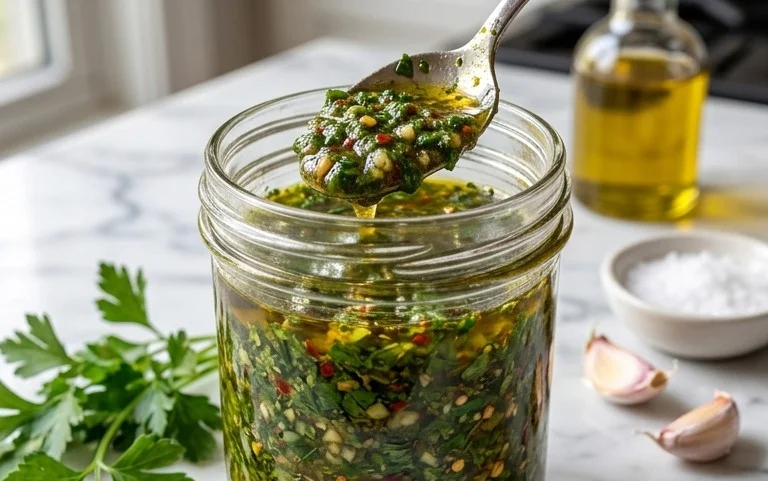
The final step is to season your chimichurri and ensure all the flavors are perfectly balanced. Add the kosher salt to the food processor. Kosher salt has a coarser texture and dissolves well, making it ideal for seasoning sauces. Pulse the food processor a few more times to fully incorporate the salt and allow all the flavors to meld. At this point, taste your chimichurri. This is your opportunity to adjust the seasoning to your personal preference. Does it need more salt? Is it tangy enough? Would you like a little more heat from the red pepper flakes? You can add a pinch more salt, a splash more vinegar, or a bit more lemon juice to achieve your desired flavor profile. You can also pulse it a bit more if you prefer a smoother consistency, or leave it as is for a chunkier sauce. Once you’re happy with the taste and consistency, transfer the chimichurri to a clean jar or airtight container. For the best flavor, allow the chimichurri to rest in the refrigerator for at least 30 minutes before serving. This resting period allows the flavors to deepen and marry, creating a more complex and delicious sauce. You’ll find that the vibrant green color intensifies, and the aroma becomes even more enticing. This chimichurri is best enjoyed fresh, but it will keep in the refrigerator for up to a week. Enjoy!

Conclusion:
There you have it – your ultimate guide to creating a vibrant and incredibly versatile Chimichurri Sauce! This Argentinian classic is more than just a condiment; it’s a flavor explosion waiting to happen. Its beauty lies in its simplicity, relying on fresh herbs and bright, zesty notes to elevate any dish. I truly believe this recipe is fantastic because it’s so quick to whip up, requires no cooking, and instantly transforms humble ingredients into something special. Whether you’re grilling steak, roasting chicken, or simply dressing up some roasted vegetables, this Chimichurri Sauce is your secret weapon for deliciousness.
Don’t be afraid to experiment! While this classic recipe is a perfect starting point, feel free to play with the proportions of herbs to suit your palate. Some people love more parsley, while others prefer a stronger garlic punch. You can also introduce a pinch of red pepper flakes for a touch of heat. I highly encourage you to give this Chimichurri Sauce recipe a try – I promise you won’t regret it!
Frequently Asked Questions:
How long does chimichurri sauce last in the refrigerator?
When stored in an airtight container in the refrigerator, this Chimichurri Sauce will stay fresh for about 5-7 days. The flavors will continue to meld and deepen over time, making it even more delicious!
Can I freeze chimichurri sauce?
Yes, you can definitely freeze chimichurri sauce! The best way to do this is to pour it into ice cube trays and freeze until solid. Once frozen, transfer the chimichurri cubes to a freezer-safe bag or container. This makes it super convenient to thaw and use just what you need. Keep in mind that the texture might change slightly upon thawing, but the flavor will remain excellent.
What are the best ways to serve chimichurri sauce?
The serving suggestions are endless! It’s a quintessential accompaniment to grilled or roasted meats like steak, chicken, beef, and lamb. It’s also amazing drizzled over fish, vegetables (think roasted potatoes, asparagus, or broccoli), or even as a flavorful addition to sandwiches and wraps. Don’t hesitate to get creative!
Chimichurri Sauce
A vibrant and zesty Argentinian herb sauce perfect for grilled meats and vegetables.
Ingredients
-
1 cup fresh Italian flat-leaf parsley, leaves only, stems removed
-
1/4 cup fresh cilantro, leaves only, stems removed
-
1/4 cup fresh oregano, leaves only, stems removed
-
1/3 cup roughly chopped red onion
-
3 cloves garlic, peeled
-
1/2 teaspoon red pepper flakes
-
1/2 cup extra-virgin olive oil
-
1/4 cup red grape juice vinegar
-
3 tablespoons fresh lemon juice
-
1 teaspoon kosher salt
Instructions
-
Step 1
Finely chop the fresh parsley, cilantro, and oregano. Place them in a medium bowl. -
Step 2
Add the roughly chopped red onion and minced garlic to the bowl with the herbs. -
Step 3
Stir in the red pepper flakes, red grape juice vinegar, fresh lemon juice, and kosher salt. -
Step 4
Gradually whisk in the extra-virgin olive oil until well combined and the sauce is emulsified. -
Step 5
Taste and adjust seasoning as needed. For best flavor, let the chimichurri sit for at least 10 minutes before serving to allow the flavors to meld.
Important Information
Nutrition Facts (Per Serving)
It is important to consider this information as approximate and not to use it as definitive health advice.
Allergy Information
Please check ingredients for potential allergens and consult a health professional if in doubt.